Much like the fabled first Thanksgiving feast, you’ll discover the flavors that sautauthig carries from centuries of Native American wisdom in every spoonful. This hearty porridge, blending cornmeal with fresh blueberries and maple syrup, isn’t just a simple breakfast dish—it’s a window into Wampanoag culinary traditions. You’re about to learn how this humble combination of ingredients transformed into a cherished symbol of cultural heritage, and why it’s worth adding to your own morning routine. Once you have tried your own Saututhig, make sure to come back and let us know how it went. Leave comments, tips and tricks that you learned in your Saututhig adventure.
History of Saututhig
The roots of sautauthig stretch deep into Native American culinary history, particularly among the Wampanoag people of present-day Massachusetts.
You’ll find this comforting dish mentioned in some of the earliest colonial records, where it’s noted as a staple food that helped sustain both Native Americans and European settlers.
When you’re enjoying this hearty pudding today, you’re tasting a piece of history that likely graced the tables at the first Thanksgiving celebration.
The dish represents one of the earliest examples of cultural fusion in American cooking, combining indigenous ingredients like cornmeal and blueberries with European cooking methods.
While you might think maple syrup was always part of the recipe, it’s actually a later addition – early versions relied solely on the natural sweetness of blueberries.
Recipe for the best traditional Saututhig
Traditional Sautauthig stands as one of the most historically significant Native American dishes, combining the simplicity of cornmeal with the natural sweetness of blueberries. This hearty pudding-like creation dates back to colonial times and was likely shared during early encounters between Native Americans and European settlers.
The beauty of Sautauthig lies in its straightforward preparation method and minimal ingredient list, making it an accessible dish that has stood the test of time. While modern variations exist, this recipe stays true to the traditional preparation method, resulting in a comforting meal that can be enjoyed at any temperature.
Ingredients:
- 1½ cups water
- ¾ cup cornmeal
- 2 cups blueberries (fresh or dried)
- 3 tablespoons maple syrup
- ½ teaspoon salt
Bring water and salt to a gentle boil in a medium saucepan over medium heat. Gradually add cornmeal while whisking continuously to prevent lumps. Reduce heat to low, cover the pan, and simmer for 10 minutes, stirring occasionally until the mixture thickens to a porridge-like consistency.
Remove from heat and stir in the maple syrup until well combined. Finally, fold in the blueberries gently until they’re evenly distributed throughout the mixture.
For optimal results, fresh blueberries work best during their peak season, though dried blueberries offer a more intense flavor profile. If using dried blueberries, soak them in warm water for 10 minutes before incorporating them into the mixture.
Monitor the consistency closely during cooking – it should resemble thick porridge. If the mixture becomes too thick, gradually add small amounts of warm water while stirring until reaching the desired consistency. The dish will continue to thicken as it cools and can be served either hot or cold.
Cooking Steps
You’ll start by bringing salted water to a gentle boil before gradually whisking in your cornmeal, making sure to stir constantly to prevent any pesky lumps.
Once your mixture has thickened after about 10 minutes of simmering, you’ll remove it from heat and incorporate the maple syrup, followed by carefully folding in your choice of fresh or dried blueberries.
If your sautautig becomes too thick during preparation, you can easily adjust the consistency by stirring in small amounts of warm water until it reaches the perfect porridge-like texture.
step 1. Bring Water to Boil
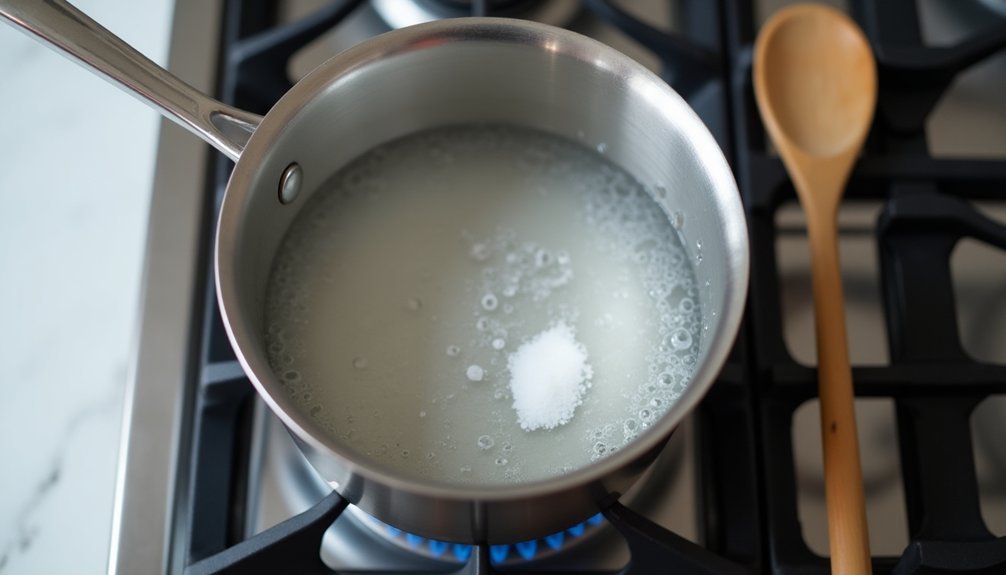
Pour your measured 1½ cups of water into a medium saucepan, along with the ½ teaspoon of salt. You can lower this amount if you have someone with blood pressure issues.
Place the saucepan on your stovetop and set the heat to medium. You’ll want to keep a close eye on the water as it begins to warm up.
Watch for small bubbles to start forming at the bottom of the pan – that’s your first sign that the water’s heating nicely.
Once you see these bubbles steadily rising to the surface, you’re getting close to the gentle boil you’re looking for.
Don’t crank up the heat trying to speed things up; a slower approach will give you better control.
When you see consistent, small bubbles breaking the surface but it’s not at a rolling boil, you’ve hit the sweet spot.
This gentle boil is perfect for adding your cornmeal in the next step.
step 2. Whisk in Dry Ingredients
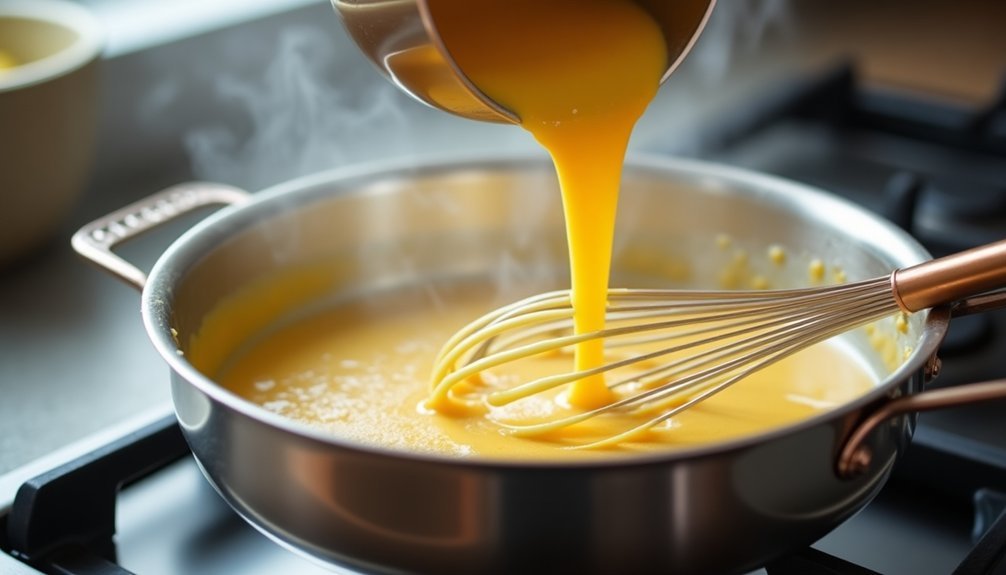
Gently sprinkle the cornmeal into your simmering water in a thin, steady stream while whisking continuously with your other hand.
You’ll want to maintain a constant whisking motion to prevent any lumps from forming – nobody likes a lumpy sautauthig!
Once you’ve added all the cornmeal, keep whisking for about 30 seconds to ensure everything’s well combined.
You’ll notice the mixture starting to thicken almost immediately. Add the salt and give it another good stir to distribute it evenly throughout the cornmeal mixture.
The consistency should be smooth and free of any dry pockets or clumps. If you spot any stubborn lumps, don’t worry – just press them against the side of the pan with your whisk to break them up. Remember that Saututhig is a very old cooking recipe and you should take your time doing this as it has been done for hundreds of years.
step 3. Add Maple Syrup
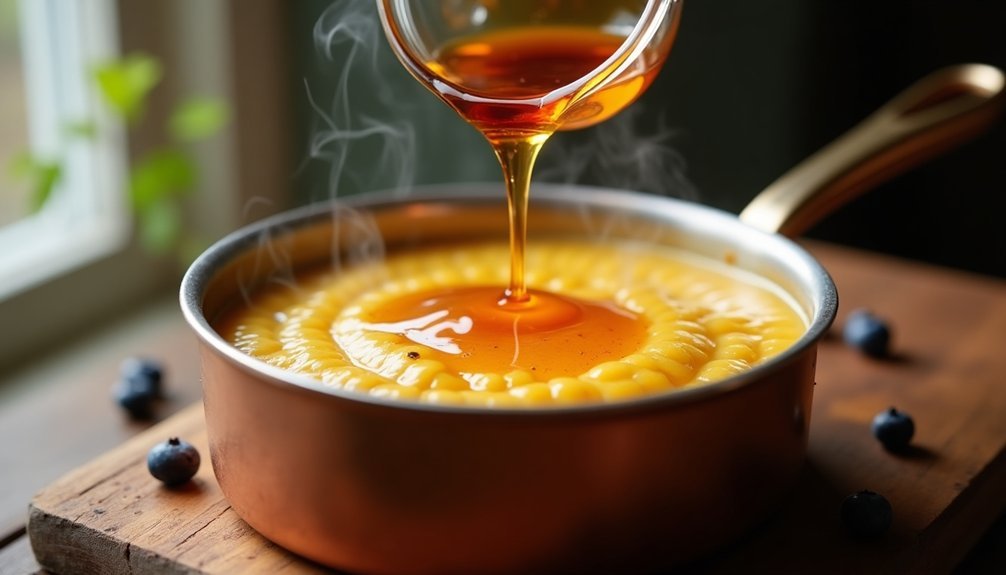
The next critical step comes after removing your cornmeal mixture from the heat.
You’ll want to add 3 tablespoons of maple syrup while the mixture is still warm and easy to stir. Make sure you’re using pure maple syrup – it’ll give your sautauthig that authentic, traditional sweetness that’s been part of this recipe for centuries.
Using steady, even strokes, stir the maple syrup into your cornmeal mixture until it’s completely incorporated.
You’ll notice the golden color spreading throughout as you mix. Don’t rush this step; take about 30 seconds to ensure everything’s well combined. If you see any patches of syrup that haven’t blended in, keep stirring until the mixture has a uniform consistency.
The warmth of your cornmeal will help the maple syrup distribute evenly.
step 4. Add Blueberries to Mixture
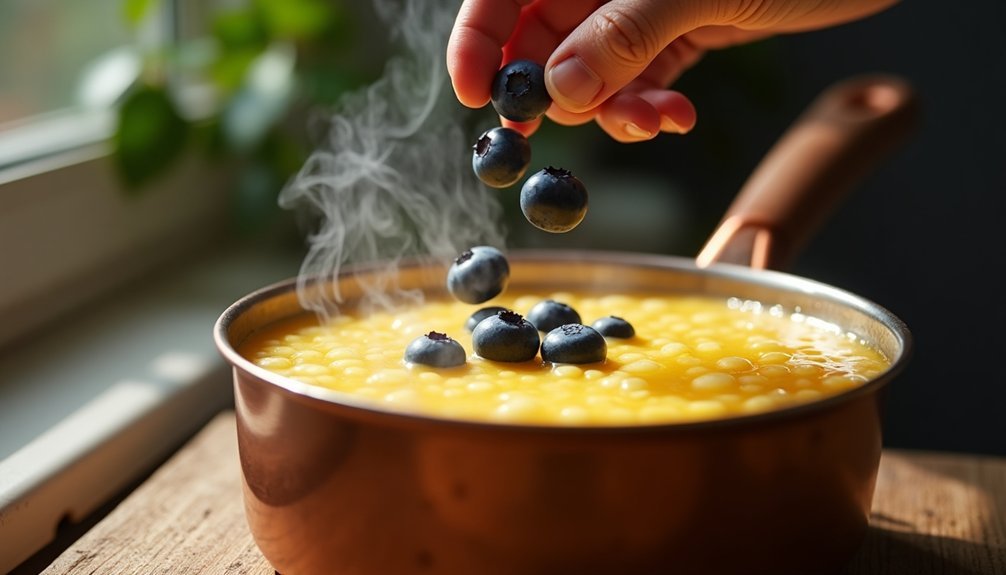
Now’s the perfect time to fold your blueberries into the warm cornmeal and maple syrup mixture.
If you’re using dried blueberries, you’ll want to soak them in warm water for about 10 minutes first to plump them up nicely.
Gently incorporate the blueberries using a folding motion – you don’t want to mash them. Use a rubber spatula to carefully lift and fold the mixture from the bottom up, rotating the bowl as you go.
You’ll know you’re done when the blueberries are evenly distributed throughout the cornmeal mixture.
If your sautautig seems too thick at this point, you can add a splash of warm water and stir until you reach that perfect porridge-like consistency. The berries will add lovely bursts of sweetness to every spoonful.
step 5. Adjust Final Dish Consistency
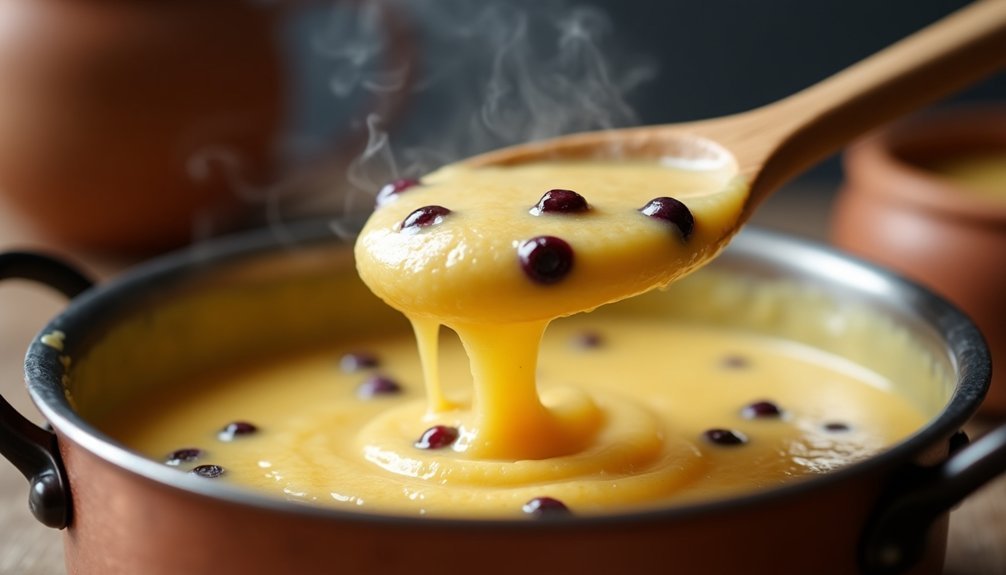
After incorporating the blueberries, you’ll need to check your sautauthig’s consistency, which should be similar to a thick porridge. Keep in mind also that porridge is a English word used to describe sautauthig .
If it’s too thick for your liking, don’t worry – it’s an easy fix. Simply add warm water or warm milk, one tablespoon at a time, while stirring gently until you reach your desired consistency.
Keep in mind that your sautauthig will continue to thicken as it cools, so you might want to make it slightly thinner than your final target consistency.
If you’re planning to serve it cold, this becomes even more important. You can always test a small portion by letting it cool for a few minutes to get a better idea of the final texture.
Whether you prefer it thick and hearty or smooth and creamy, the choice is yours!
Final Thoughts
Making this traditional Native American dish, sautauthig , lets you experience a meaningful piece of shared colonial history while enjoying a nutritious, versatile meal.
You’ll find that sautauthig’s simplicity highlights the natural flavors of its ingredients, proving that sometimes the best recipes are the most straightforward ones.
Whether you’re serving it for breakfast or as a comforting dessert, you’re participating in a culinary tradition that spans centuries.
The dish’s adaptability means you can enjoy it year-round, using fresh berries in summer or dried ones in winter, just as Native Americans and settlers did.
Remember that while modern variations exist, there’s something special about preparing it in its original form – it’s like taking a delicious step back in time.