Did you know that Balsamic Chicken Caprese wasn’t actually created in Capri, despite its name? The dish emerged as a modern American twist on the traditional Italian Caprese salad, combining the best of both cultures. You’ll find that transforming this beloved appetizer into a protein-rich main course isn’t just clever – it’s a game-changer for your dinner rotation. Let’s explore how you can master this 30-minute meal that’ll have your family thinking you’ve been secretly training in Italy. So what do you think about the idea of a dish of Balsamic Chicken Caprese?
History of Balsamic Chicken Caprese
The evolution of Chicken Caprese traces back to the 1950s on the Isle of Capri, where the original Insalata Caprese first captured hearts with its simple combination of tomatoes, mozzarella, and basil.
You’ll find that this beloved salad reflected the colors of the Italian flag, making it a patriotic dish that locals proudly served to visitors.
As home cooks sought heartier versions of this Mediterranean classic, they began adding protein in the 1980s.
You’re looking at a dish that transformed from a simple antipasto into a complete meal!
The addition of chicken and balsamic glaze emerged in American kitchens during the 1990s, when fusion cuisine gained popularity.
Today, you’ll see this adaptation on restaurant menus worldwide, proving that even traditional recipes can evolve while maintaining their core appeal.
Recipe for Balsamic Chicken Caprese
Balsamic Chicken Caprese brings together the vibrant flavors of Italy in a protein-rich main course that’s both elegant and straightforward. This dish transforms the classic Caprese salad into a satisfying meal by adding perfectly cooked chicken breasts and a rich balsamic glaze.
The beauty of this recipe lies in its simplicity, requiring just five key ingredients while delivering restaurant-quality results. Each component plays a vital role: tender chicken provides the foundation, fresh mozzarella adds creamy texture, ripe tomatoes bring brightness, aromatic basil introduces a fresh element, and balsamic glaze ties everything together with its sweet-tangy finish.
- 4 boneless, skinless chicken breasts
- 8 oz fresh mozzarella, sliced
- 4 medium Roma tomatoes, sliced
- 1 cup fresh basil leaves
- 1/2 cup balsamic glaze
- Salt and black pepper to taste
Season chicken breasts generously with salt and pepper. Heat a large skillet over medium-high heat and cook chicken for 6-7 minutes per side until golden brown and internal temperature reaches 165°F. Top each chicken breast with mozzarella slices and allow to melt slightly. Layer tomato slices over the cheese, drizzle with balsamic glaze, and garnish with fresh basil leaves. Let the chicken rest for 5 minutes before serving.
For peak results, make certain chicken is at room temperature before cooking to promote even cooking. Pat chicken dry with paper towels to achieve better browning. Select firm but ripe tomatoes and slice them uniformly for even distribution. Tear basil leaves just before serving to maintain freshness and aroma.
If making your own balsamic glaze, simmer regular balsamic vinegar over low heat until reduced by half and slightly thickened.
Cooking Steps for the best Balsamic Chicken Caprese
You’ll want to start by letting your chicken breasts reach room temperature before seasoning them generously with salt and pepper.
Once your skillet is hot, cook the chicken for 6-7 minutes per side until it’s beautifully golden brown and registers 165°F internally.
Finally, top each piece with slices of fresh mozzarella and tomatoes, drizzle with your balsamic glaze, and garnish with torn basil leaves – you’re just minutes away from an Italian restaurant-worthy meal!
step 1. Bring Chicken to Room Temperature
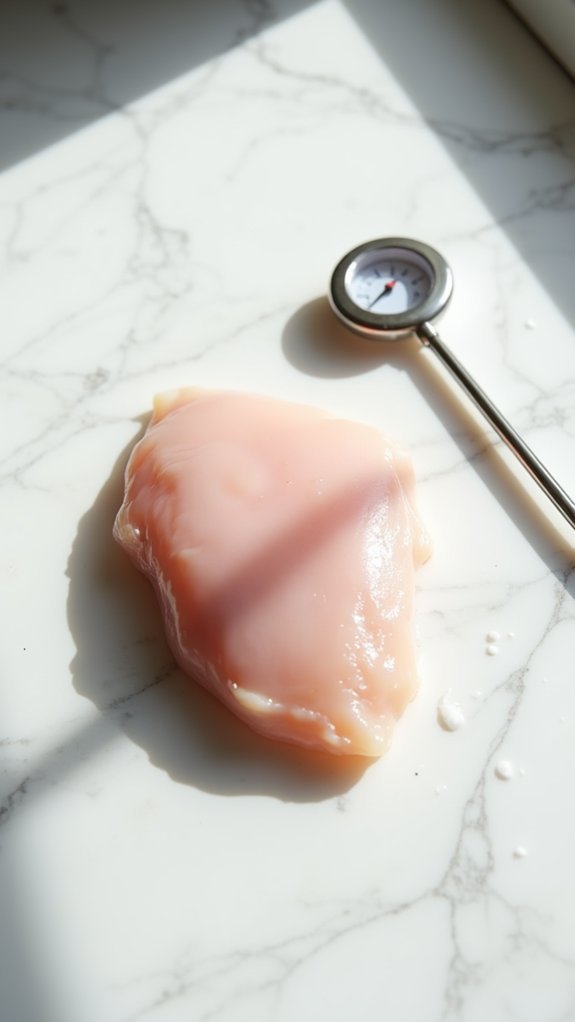
Before starting your Chicken Caprese journey, remove the chicken breasts from the refrigerator and let them rest on the counter for 30 minutes. This vital step guarantees even cooking and helps you achieve that perfect golden-brown sear.
While you’re waiting, you can prep your other ingredients! Cold chicken straight from the fridge will cook unevenly, leaving you with a tough exterior and potentially raw center – not exactly what you’re aiming for.
Room temperature chicken (around 68-72°F) allows the proteins to relax, resulting in more tender meat that cooks uniformly.
If you’re pressed for time, you can speed up the process by placing the sealed chicken in a bowl of lukewarm (not hot) water for 15 minutes. Just remember to pat the chicken dry before seasoning!
[DIRECTIONS]:
step 2. Season Chicken With Spices
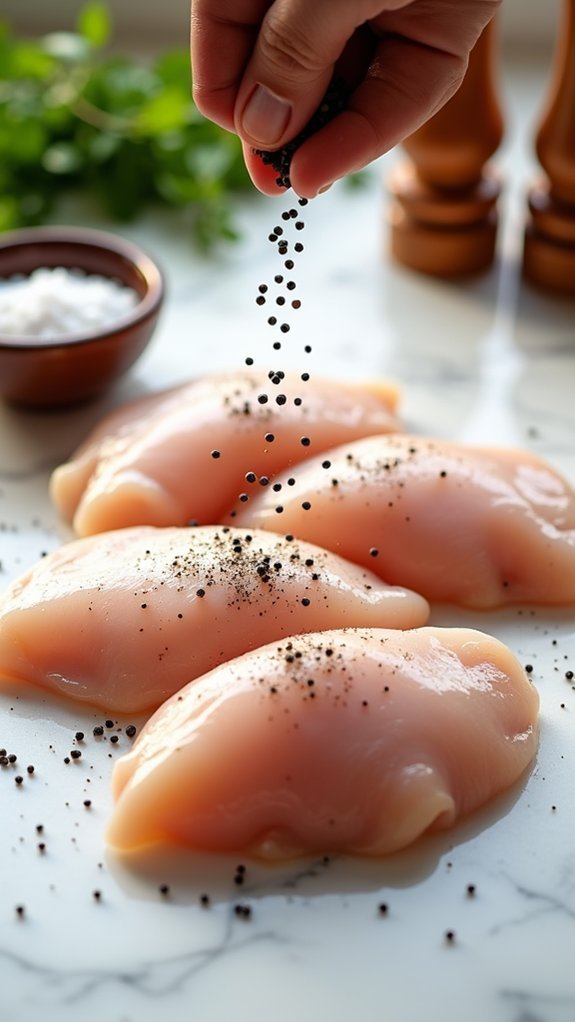
Once your chicken has reached room temperature, liberally season both sides with 1 teaspoon each of salt and freshly ground black pepper.
Don’t be shy with the seasoning – you want the flavors to penetrate the meat while it cooks!
For extra depth, you can add 1/2 teaspoon of garlic powder and a pinch of dried oregano to complement the Caprese toppings.
Pat the seasonings gently into the meat with your fingertips to help them stick. You’ll know you’ve seasoned properly when you can see an even coating of spices across the surface.
Make sure you’ve seasoned both sides equally – there’s nothing worse than biting into perfectly cooked chicken that’s only seasoned on one side!
Let the seasoned chicken rest for 2-3 minutes before cooking to allow the spices to adhere.
step 3. Cook Chicken Until Golden
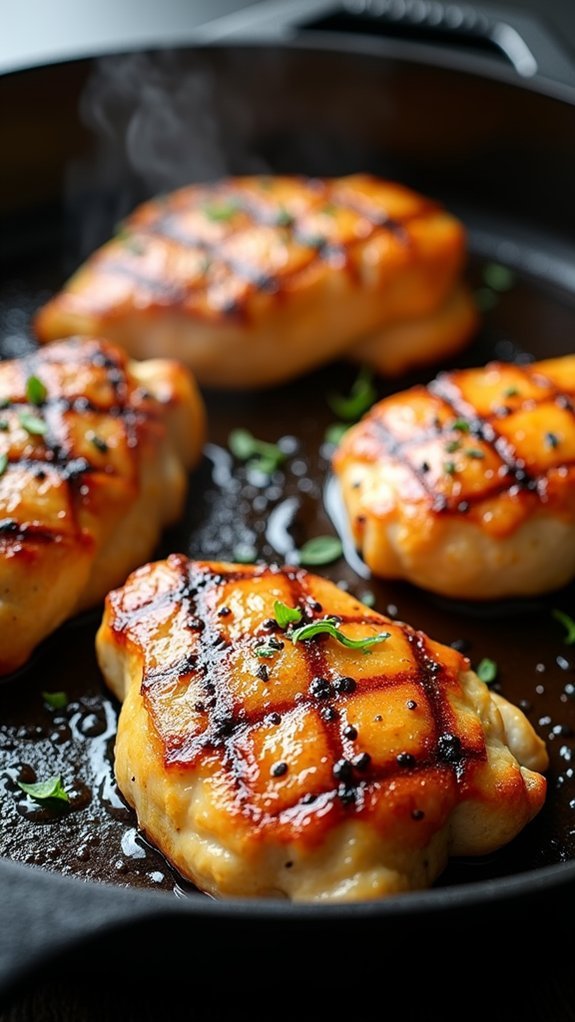
Heat a large skillet over medium-high heat until a drop of water sizzles and evaporates on contact.
Add a tablespoon of olive oil and let it warm for 30 seconds – you’ll know it’s ready when it starts to shimmer slightly.
Place your seasoned chicken breasts in the skillet, making sure they aren’t touching each other (nobody likes clingy chicken!).
Cook for 6-7 minutes on the first side until you see a beautiful golden-brown crust forming.
You’ll notice the edges starting to turn opaque as they cook.
Flip the chicken and cook for another 6-7 minutes on the second side.
To verify they’re done, the internal temperature should reach 165°F, or cut into the thickest part – the meat should be white throughout with no pink remaining.
step 4. Add Cheese and Tomatoes
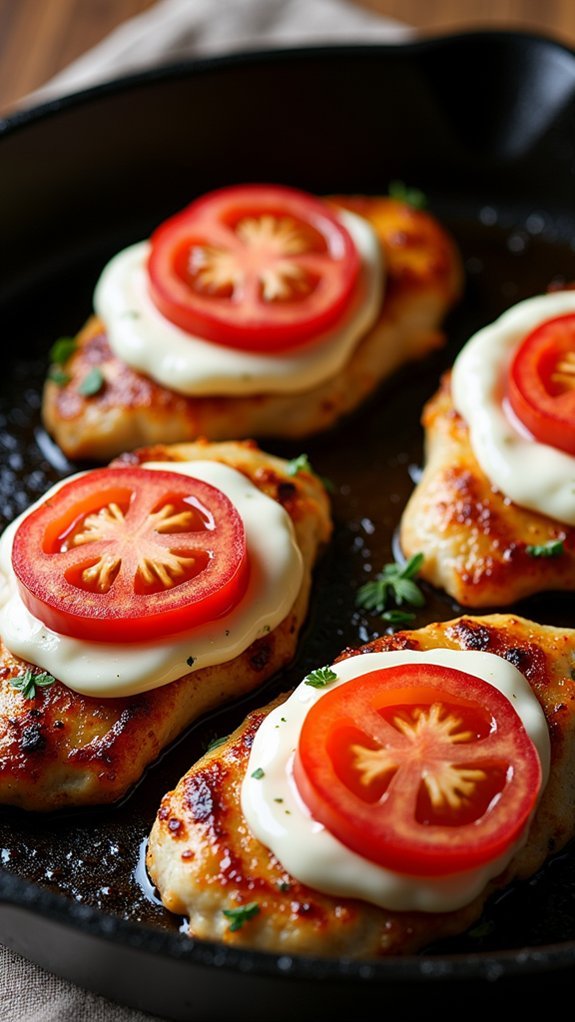
While the chicken finishes cooking, lay 2-3 slices of fresh mozzarella on top of each chicken breast, spacing them evenly.
You’ll want the heat from the chicken to gently melt the cheese – it’s ready when it starts getting soft but isn’t completely liquified.
Next, layer 3-4 thin slices of Roma tomatoes over the melting mozzarella.
Don’t worry if some slide off; you can always nudge them back into place! The tomatoes will warm slightly from the residual heat, enhancing their natural sweetness.
If your tomatoes are particularly juicy, give them a quick pat with a paper towel before placing them on the cheese.
This prevents excess moisture from making your perfectly cooked chicken soggy – because nobody wants a swimming pool on their dinner plate!
step 5. Drizzle Balsamic and Serve
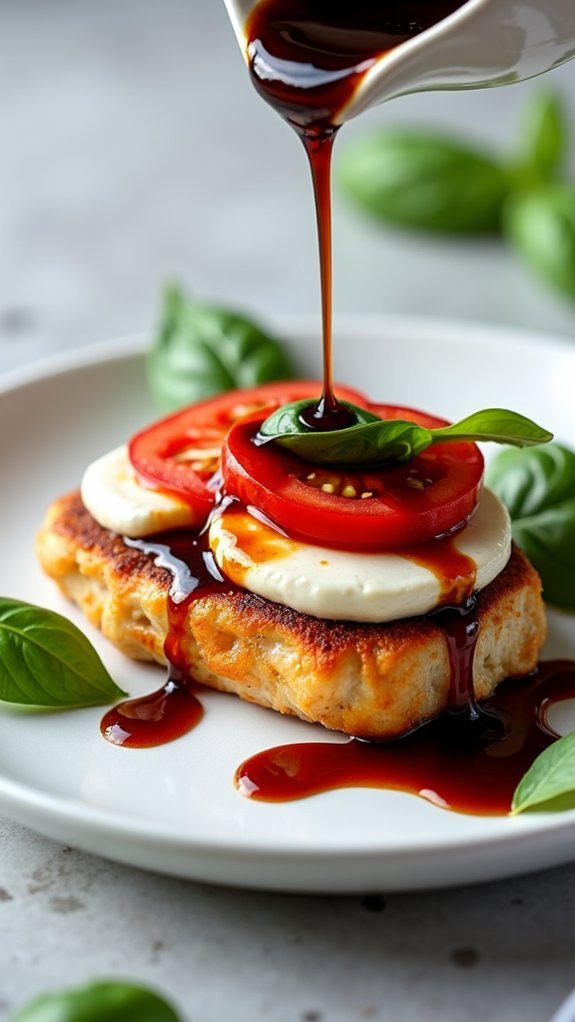
Finish your masterpiece by drizzling 2 tablespoons of rich balsamic glaze in elegant zigzags across each chicken breast.
Don’t worry if your zigzags aren’t perfect – even professional chefs have their “abstract art” moments!
Scatter fresh basil leaves over the top, letting them cascade naturally around the melted mozzarella and tomatoes.
Let your creation rest for 5 minutes before serving – you’ll want those flavors to mingle and the juices to redistribute.
While you’re waiting, you can warm up any remaining balsamic glaze to serve on the side.
For a picture-perfect presentation, place each chicken breast on warmed plates and garnish with extra basil leaves.
You’ve just created a restaurant-worthy dish that’ll have everyone asking for seconds!
Final Thoughts on Balsamic Chicken Caprese
Once you’ve mastered this Mediterranean-inspired dish, you’ll find yourself coming back to it again and again for its perfect balance of flavors.
With just five ingredients, you’re creating restaurant-quality results that’ll impress family and dinner guests alike.
Remember that timing is everything with this recipe – you want the mozzarella just melted enough to be creamy but not completely liquefied.
Don’t skip the 5-minute rest period, as it guarantees your chicken stays juicy. Always thought it was funny to hear people say to let it rest. Like it might need a vacation or something. But the truth is. It is important. So make sure your Balsamic Chicken Caprese has the best flavors and follow this recipe.
If you’re meal prepping, you can prepare the chicken in advance, but add the toppings just before serving for the freshest results.
Keep this recipe in your back pocket for those nights when you need something special without spending hours in the kitchen!