
Did you know that plantains were originally cultivated in Southeast Asia over 7,000 years ago before making their way to Caribbean cuisines? You’ll find these starchy relatives of bananas transforming into golden, caramel-coated delights through a simple cooking process that’s been perfected across generations. Whether you’re craving a tropical dessert or looking to explore international flavors, there’s an art to achieving that perfect balance of crispy exterior and tender interior that’s worth discovering. Now that you have an idea of what we are talking about lets do a little more reading and then a lot of cooking and we will start with this recipe for Caramelized Plantains.
History of Caramelized Plantains
Plantains have graced dinner tables across Latin America, the Caribbean, and West Africa for centuries.
You’ll find these versatile fruits deeply woven into the culinary traditions of regions where they’ve become a cherished staple food.
When you explore the history of caramelized plantains, you’ll discover they first gained popularity in tropical climates where the fruit naturally thrived.
Spanish and Portuguese traders introduced plantains to the Caribbean in the 16th century, though they were already a dietary staple in West Africa.
The practice of caramelizing them evolved as cooks discovered how heat transformed the starches into natural sugars.
Today, you’ll see this cooking method celebrated in countless variations, from Puerto Rico’s plátanos maduros to the Dominican Republic’s platanos al caldero.
Caramelized Plantains Recipe
Caramelized plantains transform an everyday tropical fruit into a decadent dessert that perfectly balances sweet and creamy flavors. When ripe plantains are cooked slowly in butter and brown sugar, they develop a rich, golden-brown exterior while maintaining their soft, tender interior.
This recipe elevates the traditional preparation by adding a luxurious coconut cream sauce, creating a harmonious blend of Caribbean-inspired flavors. The natural sweetness of very ripe plantains, identified by their black-spotted peels, is essential for achieving the perfect caramelization.
Ingredients:
- 4 very ripe plantains
- 4 tablespoons unsalted butter
- 1/2 cup brown sugar
- 1/4 teaspoon cinnamon
- 1 pinch salt
- 1 can (14 oz) coconut cream
- 1 teaspoon vanilla extract
- 2 tablespoons honey
- Optional garnish: toasted coconut flakes
Peel and slice the plantains diagonally into 1-inch thick pieces. Melt butter in a large skillet over medium heat, then add brown sugar and stir until it begins to dissolve. Add plantain slices and cook for 4-5 minutes on each side until they develop a golden-brown caramelized coating.
Meanwhile, warm coconut cream in a separate pan with vanilla and honey, stirring until smooth. Serve the caramelized plantains hot, drizzled with the coconut cream sauce.
For best results, choose plantains that are very ripe with peels that are almost completely black – these will be naturally sweeter and softer. If the caramel starts to crystallize during cooking, add a splash of water to help it re-melt.
The plantains should be served immediately while hot, as they tend to become firmer as they cool. Store any leftover coconut cream sauce in an airtight container in the refrigerator for up to three days.
Cooking Steps
Start by choosing deeply yellow plantains with black spots, which tell you they’re perfectly ripe and sweet for caramelizing!
Slice them diagonally into 1-inch thick pieces, then heat 4 tablespoons of butter in a large skillet over medium heat until it’s bubbling and golden.
Once your butter’s ready, you’ll add the plantains along with a mixture of 1/3 cup brown sugar and a pinch of salt, letting them cook for 4-5 minutes per side before drizzling with your prepared coconut cream sauce. Here we go folks. The very best Caramelized Plantains!
step 1. Selecting Ripe Yellow Plantains
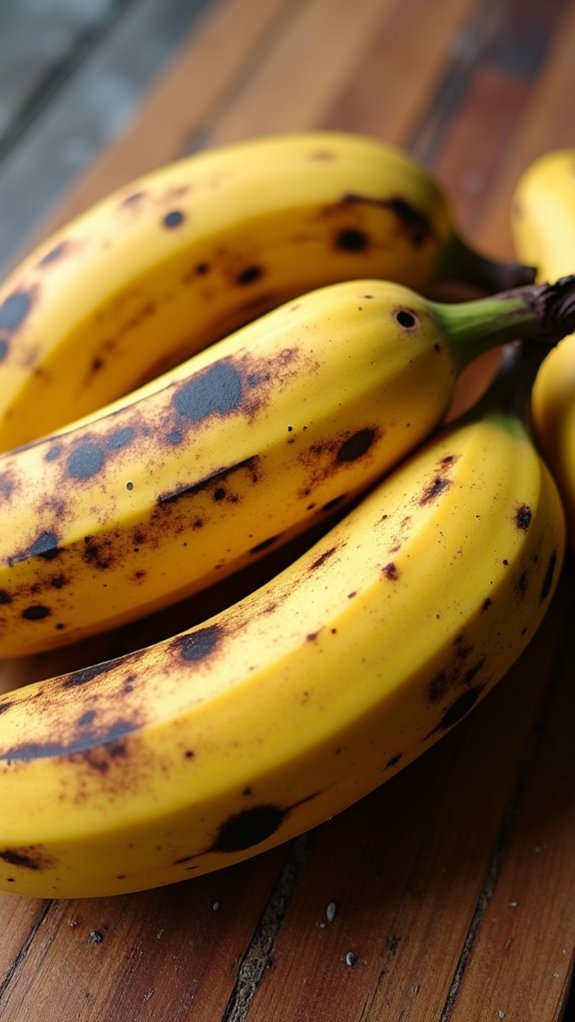
When selecting plantains for caramelizing, you’ll want to look for ones that are mostly yellow with plenty of black spots – similar to a banana that’s begging to become bread!
Perfectly ripe plantains should feel slightly soft when you gently press them, but not mushy. The peel should be primarily yellow with at least 50% black spotting, indicating they’ve developed their natural sugars.
If your plantains are still green or yellow without spots, let them ripen at room temperature for 4-7 days.
Don’t worry if the skin looks almost entirely black – that’s actually ideal! Unlike bananas, plantains can handle more ripening without becoming overripe.
To speed up the process, store them in a paper bag with a ripe banana. The ethylene gas will work its magic, and you’ll have caramel-ready plantains in no time.
step 2. Slicing Into Diagonal Pieces
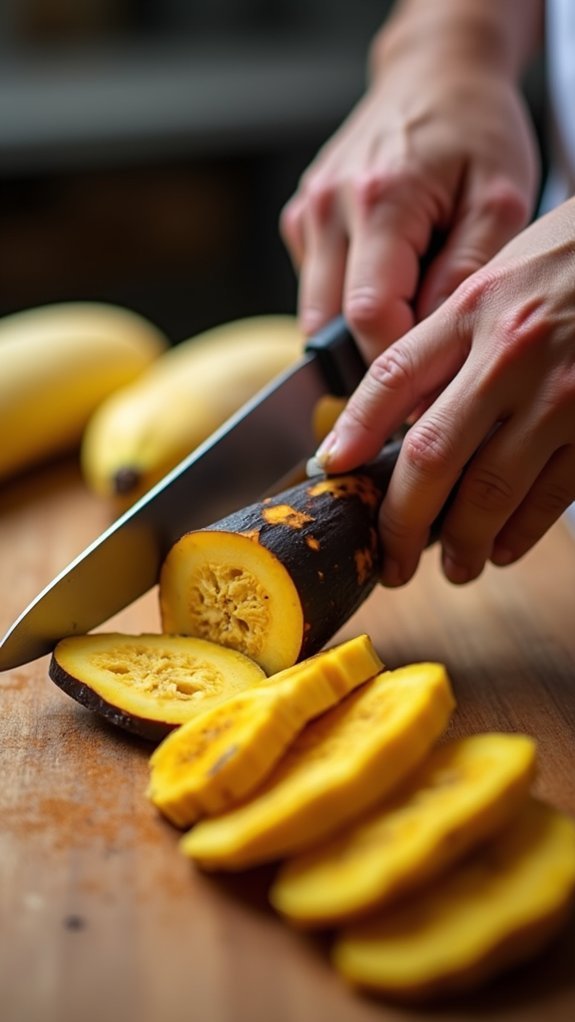
To prepare your ripened plantains for caramelizing, you’ll need to peel and slice them on a bias (diagonal) into pieces about 1½ inches long and ½ inch thick.
First, trim off both ends of the plantain. Make a shallow lengthwise cut through the peel’s ridges, being careful not to slice into the fruit itself. Remove the peel in sections – it’ll come off much easier than a banana peel!
Place your plantain on a cutting board at a 45-degree angle and slice diagonally, maintaining consistent thickness. This diagonal cut isn’t just for looks – it creates more surface area for caramelization and gives your finished dish that restaurant-worthy presentation.
You should get about 8-10 pieces per plantain, depending on its size. Keep your slices uniform to ensure even cooking times.
step 3. Heat Butter Until Bubbling
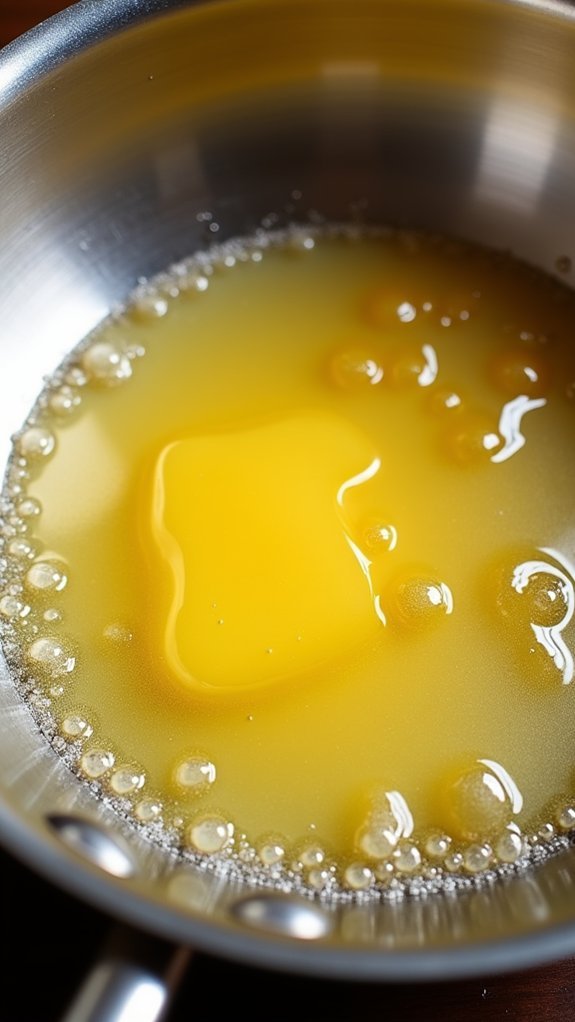
Now that your plantains are perfectly sliced, place a large heavy-bottomed skillet over medium heat and add 3 tablespoons of unsalted butter.
Watch as the butter begins to melt and coat the bottom of your pan evenly.
You’ll want to heat the butter until it’s actively bubbling but not burning – this usually takes about 2-3 minutes.
If you see the butter starting to brown, lower your heat slightly.
The perfect temperature will create tiny, uniform bubbles across the surface of the melted butter.
This step is crucial for achieving that golden-brown caramelization we’re after.
Keep your eye on the pan (no multitasking here!), as butter can go from perfectly heated to burned in seconds.
When you see consistent bubbling and smell that warm, nutty aroma, you’re ready for the next step.
step 4. Add Brown Sugar Mixture
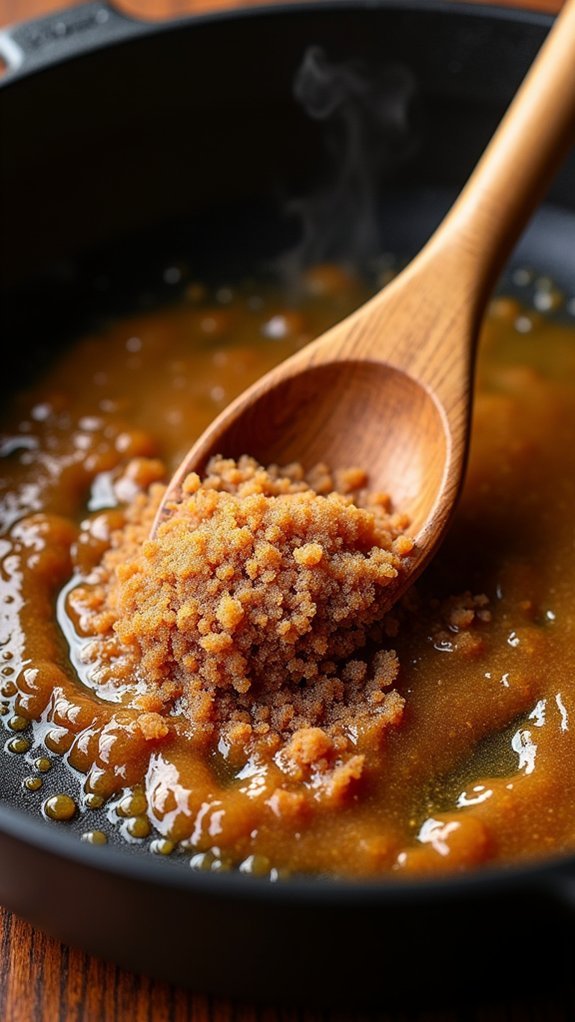
Once your butter is bubbling steadily, sprinkle 1/4 cup of light brown sugar evenly across the surface of the melted butter.
Let it melt for about 30 seconds until it starts to dissolve into the butter, creating a golden syrup-like consistency.
Using a wooden spoon or heat-resistant spatula, gently stir the brown sugar and butter together until they’re well combined.
You’ll notice the mixture beginning to caramelize and darken slightly – that’s exactly what you want!
Keep the heat at medium-low to prevent burning, and watch for the mixture to become smooth and glossy.
If you see any sugar crystals forming on the sides of the pan, don’t worry.
Just use your spatula to incorporate them back into the mixture.
The perfect caramel sauce should be uniform in color and flowing smoothly across the bottom of the pan.
step 5. Add Coconut Cream Sauce
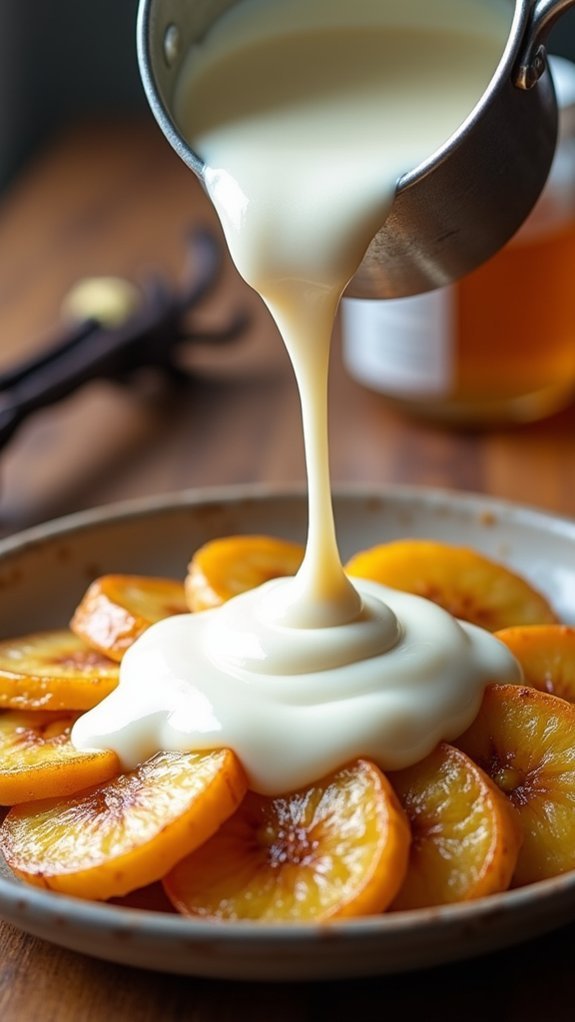
While your caramel mixture is still warm and bubbling, pour in 1 cup of coconut cream and watch as it creates a rich, velvety sauce.
Stir continuously with a wooden spoon until the sauce thickens slightly and coats the back of your spoon, about 2-3 minutes.
You’ll know the sauce is ready when it reaches a smooth, uniform consistency and has a light golden hue. If it’s too thick, don’t panic – simply add a tablespoon of warm coconut milk to thin it out.
Lower the heat to medium-low (around 325°F) and let the sauce simmer for an additional minute.
For extra tropical flair, add 1/4 teaspoon of vanilla extract and a pinch of sea salt. These subtle additions will enhance the coconut’s natural sweetness without overwhelming your perfectly caramelized plantains!
Final Thoughts
Since caramelized plantains bring such rich tropical flavors to your table, you’ll find yourself coming back to this recipe time and time again.
The combination of sweet, caramelized fruit with creamy coconut sauce creates a dessert that’s both comforting and sophisticated.
Don’t be surprised if your family starts requesting this dish for special occasions – it has that kind of crowd-pleasing appeal!
You can easily customize the sweetness level by adjusting the caramelization time or adding a sprinkle of cinnamon.
While the recipe’s roots stretch across multiple continents, you’ve now made it your own kitchen tradition.
Remember to choose plantains that are mostly black for the best results, and don’t skip the coconut cream – it’s what transforms this from a simple side dish into a memorable dessert experience.
Come on guys. Lets cook some Caramelized Plantains together!