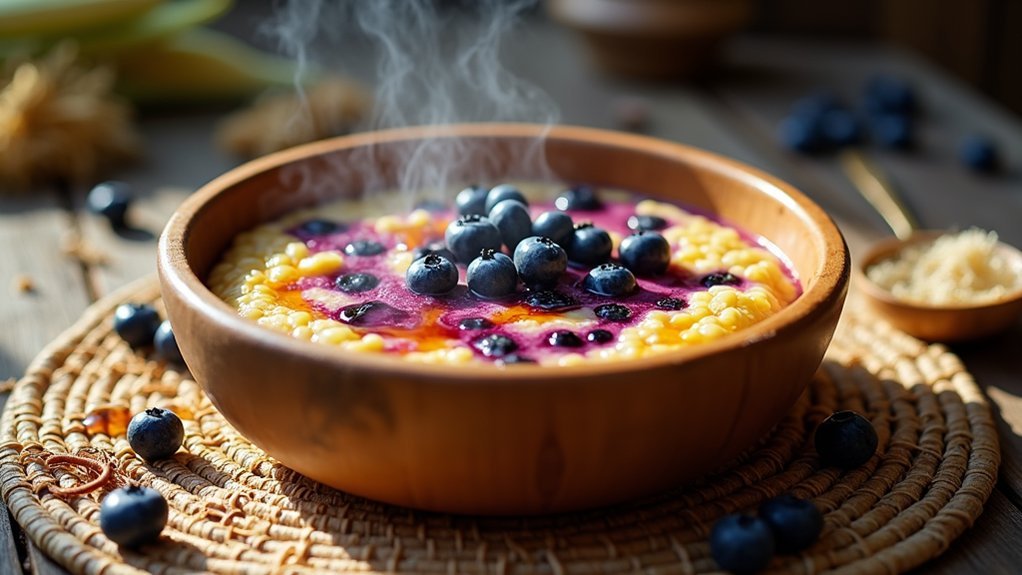
Got any idea what this is? Black Pudding in the Hole ? Just when you thought Yorkshire pudding couldn’t get more British, along comes its bolder, darker cousin! You’ll find black pudding in the hole delivers all the comfort of traditional toad in the hole, but with a rich, savory twist that’ll make your taste buds dance. This Northern English classic transforms simple batter and blood sausage into a showstopping dish – and while it might raise a few eyebrows at first, you’re about to discover why this unlikely pairing has stood the test of time.
History of Black Pudding in the Hole
While the exact origins of Black Pudding in the Hole aren’t precisely documented, this hearty dish emerged from Britain’s working-class communities in the mid-20th century.
You’ll find its roots deeply connected to the frugal cooking practices of Northern England, where families made the most of every ingredient.
As rationing ended after World War II, creative home cooks began experimenting with traditional Yorkshire pudding recipes.
They discovered that black pudding, a breakfast favorite, could replace the usual sausages in Toad in the Hole.
The dish quickly gained popularity in local pubs and family kitchens across the region.
Recipe
Black Pudding in the Hole is a hearty British dish that combines two beloved Northern England classics: Yorkshire pudding and black pudding. This satisfying meal transforms the traditional Yorkshire pudding by incorporating rich, flavorful slices of black pudding into a golden, crispy batter.
The success of this dish relies on proper temperature control and timing, resulting in a perfectly risen Yorkshire pudding batter that cradles the savory black pudding. When executed correctly, the contrast between the light, airy batter and the dense, flavorful black pudding creates an impressive dish that’s perfect for Sunday lunch or special occasions.
Ingredients:
- 1 cup plain flour
- 2 large eggs
- 1 cup whole milk
- 400g black pudding, sliced
- 4 tablespoons vegetable oil
- Salt and pepper to taste
Preheat the oven to 220°C/425°F. In a large bowl, whisk together flour, eggs, and milk until completely smooth, then season with salt and pepper. Let the batter rest at room temperature for 30 minutes.
Meanwhile, add oil to a large baking dish and heat in the oven until smoking hot. Carefully arrange black pudding slices in the hot oil, then quickly pour the batter around them. Bake for 25-30 minutes without opening the oven door until the batter is well risen and golden brown.
For best results, confirm all ingredients are at room temperature before starting. The batter should be completely lump-free and have the consistency of heavy cream. The oil must be extremely hot before adding the black pudding and batter – this is essential for achieving the characteristic rise.
Rest the finished dish for 2-3 minutes before serving to allow the batter to set slightly, but serve while still hot for the best texture and flavor.
Cooking Steps for Black Pudding in the Hole
You’ll want to start with room-temperature ingredients to achieve that perfect rise in your Yorkshire pudding batter!
Get your oil smoking hot in the baking dish, then quickly arrange the black pudding slices and pour the batter around them in one swift motion.
Once it’s in the oven, resist the urge to peek inside for the full 25-30 minutes – that’s the toughest part, but your patience will be rewarded with a gloriously puffy golden crown.
step 1. Room-Temp Ingredients First
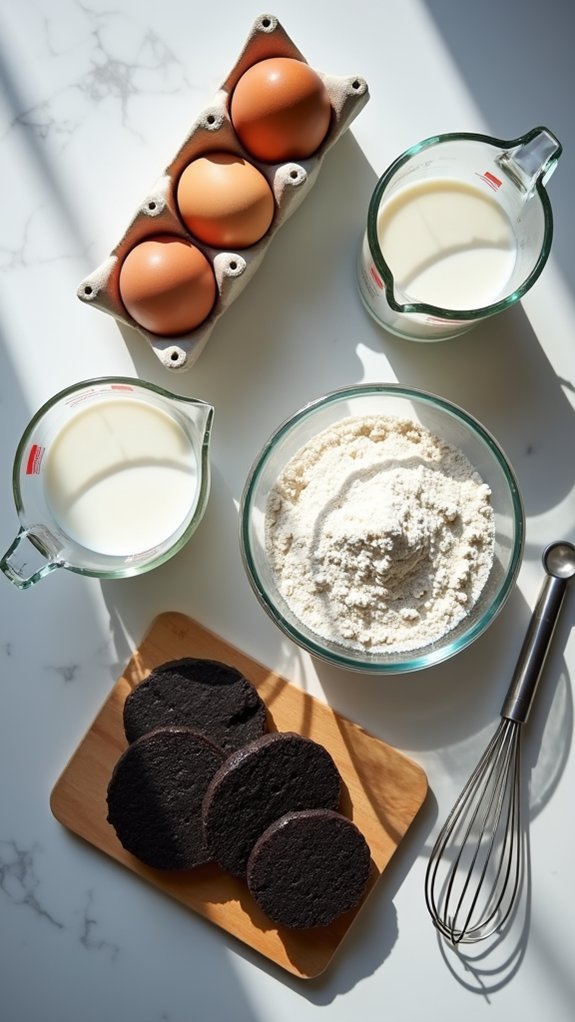
Before starting your Black Pudding in the Hole adventure, take all ingredients out of the refrigerator 30 minutes ahead of time.
You’ll need your eggs, milk, and even that sturdy black pudding to reach room temperature for the best results.
Room temperature ingredients blend more smoothly, creating a silky batter that’ll rise beautifully in the oven. Cold eggs and milk can cause your batter to seize up, leaving you with a disappointing, flat pudding – and nobody wants that!
While you’re waiting, you can measure out your flour and get your equipment ready.
Pro tip: If you’re in a hurry, place your cold eggs in warm (not hot) water for 5 minutes, and microwave your milk in 10-second bursts until it’s just tepid.
Your black pudding will warm up naturally as you prep.
step 2. Heat Oil Until Smoking
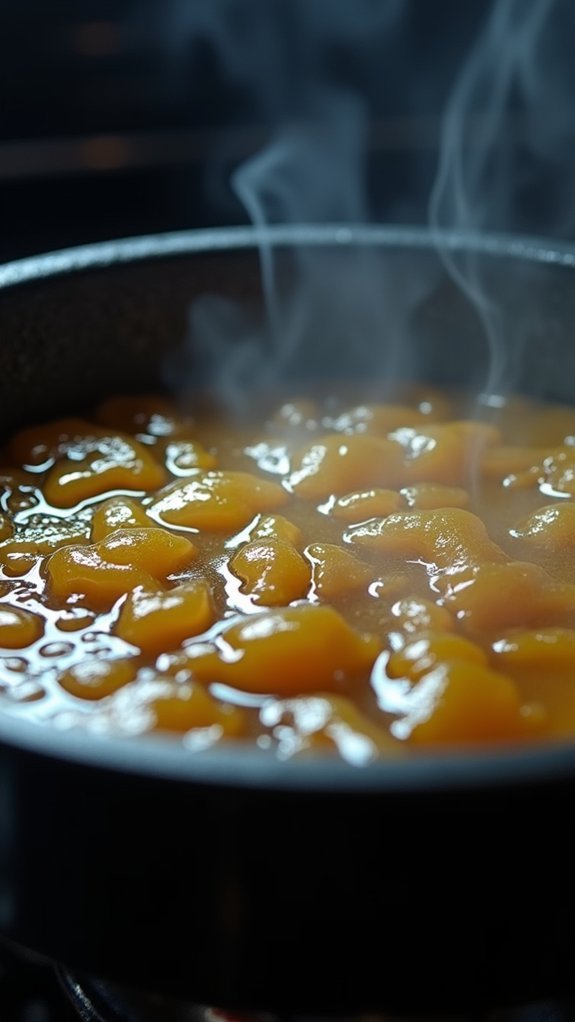
Pour the vegetable oil into your baking dish until it forms a generous 1/4-inch layer across the bottom.
Place your dish on the middle rack of your preheated 220°C/425°F oven and let it heat for about 10 minutes – you’ll know it’s ready when you see wisps of smoke rising from the surface.
While you’re waiting, arrange your black pudding slices in a single layer on a plate, so they’re ready to go.
Once the oil is smoking hot, carefully (and quickly!) remove the dish from the oven.
Working swiftly but safely, place your black pudding slices into the hot oil – they should sizzle immediately.
Pour your rested batter around the puddings, and get that dish back in the oven pronto!
Remember: no peeking for the next 25 minutes.
step 3. Pour Batter Quickly Around Pudding
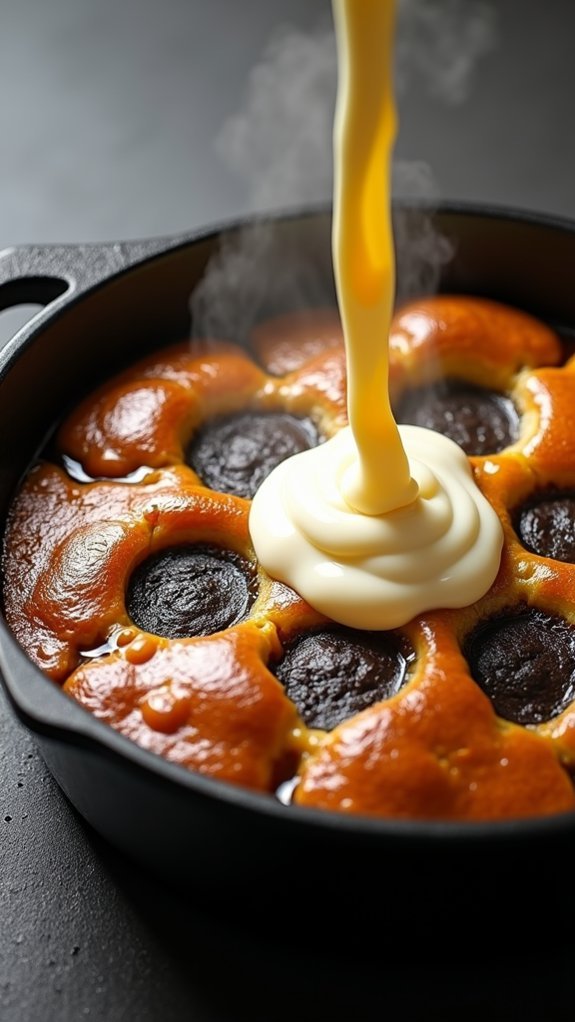
With your preheated dish out of the oven and black pudding sizzling in place, the critical moment for adding the batter has arrived.
Working swiftly but steadily, grab your well-rested batter and position yourself close to the hot dish.
Pour the batter in a continuous stream around the black pudding slices, starting from the edges and working your way toward the center. You’ll hear that satisfying sizzle as the batter hits the hot oil!
Don’t worry if some batter flows under the pudding – that’s perfectly normal. Make sure you’re distributing the mixture evenly, using about 1 cup of batter for a standard 9×13 inch dish.
Get that dish back in the oven within 20-30 seconds of pouring. Remember, every second the dish cools reduces your chances of achieving that perfect rise!
step 4. Avoid Disturbing While Baking
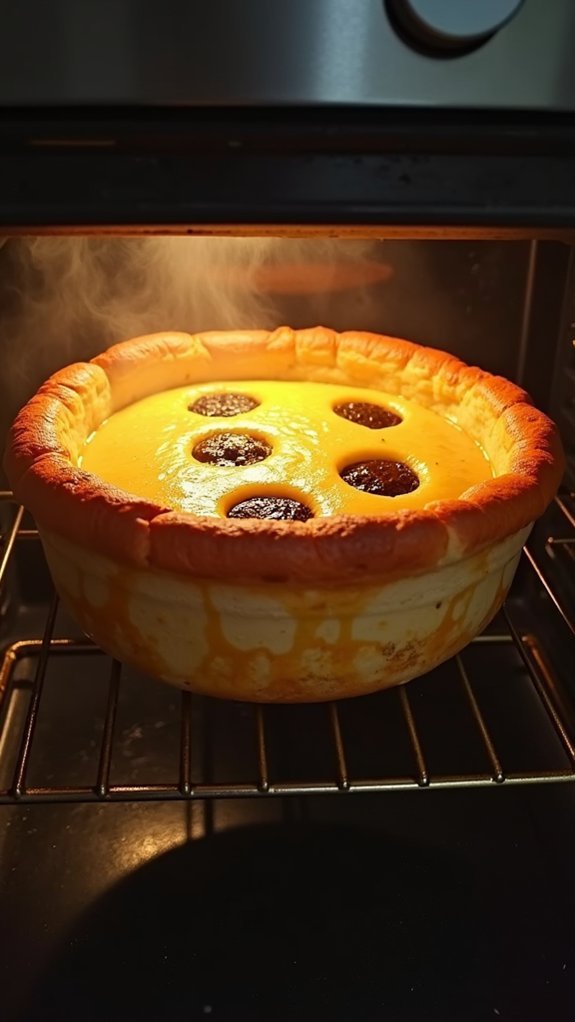
Once your batter-filled dish is safely in the oven, you’ll need to resist the urge to peek inside! Opening the door during the vital 25-30 minute baking period can cause your Yorkshire pudding to collapse, and nobody wants a flat pudding!
Keep the temperature steady at 220°C/425°F throughout the entire cooking process.
You’ll know your Black Pudding in the Hole is ready when you see a beautifully risen, golden-brown batter through the oven window. The edges should be crispy and well-browned, while the center will have puffed up dramatically around the black pudding slices.
If you’re tempted to check on it, just remember: what happens in the oven, stays in the oven – at least until that timer rings!
Your patience will be rewarded with perfectly risen results.
step 5. Let Rest Before Serving
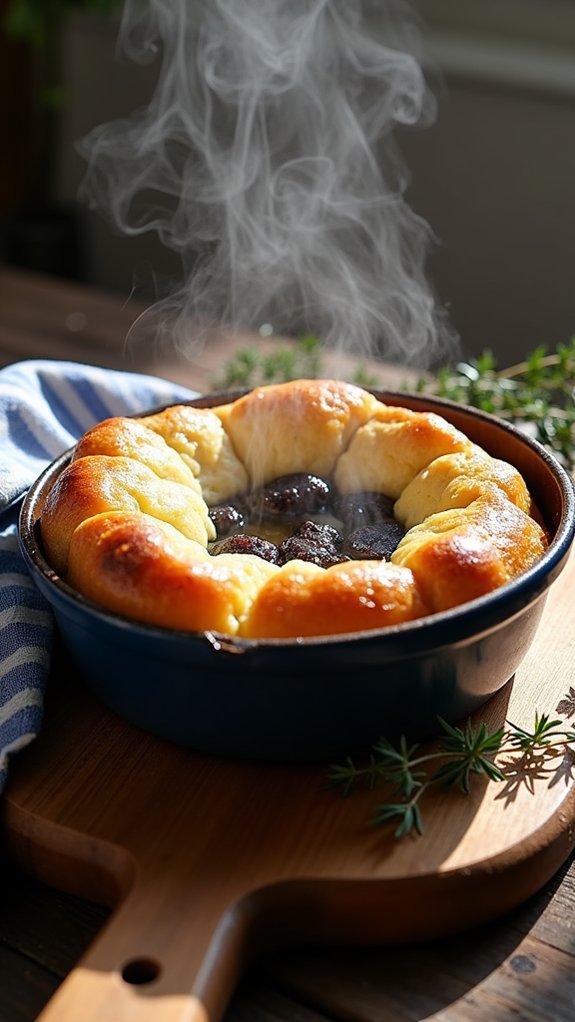
After your Black Pudding in the Hole emerges golden and glorious from the oven, it needs 5-7 minutes to rest before serving.
This resting period allows the batter to stabilize and the black pudding to settle, ensuring you’ll get clean, precise cuts when portioning.
While you’re waiting, you can warm your serving plates to 140°F/60°C – just pop them in that still-warm oven for a minute or two.
You’ll notice the pudding gradually deflating slightly during the rest, but don’t worry – that’s perfectly normal! The center should remain beautifully puffy while the edges stay crisp and golden.
Once rested, slice your Black Pudding in the Hole into generous portions and serve immediately with your favorite gravy or onion sauce while it’s still warm and inviting.
Final Thoughts on Black Pudding in the Hole
Black Pudding in the Hole stands as a delicious demonstration to British culinary innovation, proving that traditional recipes can evolve in exciting ways.
You’ll find this hearty dish offers a perfect blend of crispy Yorkshire pudding batter and rich black pudding that’s sure to impress your dinner guests.
When you’re ready to serve, remember that patience is key – letting the pudding rest for 5 minutes helps it maintain its structure.
Don’t worry if your first attempt isn’t picture-perfect; this dish is forgiving and even slightly imperfect results taste wonderful!
You can make this recipe your own by adjusting the black pudding quantity or serving it with your favorite gravy.
For the best results, stick to the 220°C temperature and resist opening that oven door – your reward will be a perfectly risen, golden-brown masterpiece.